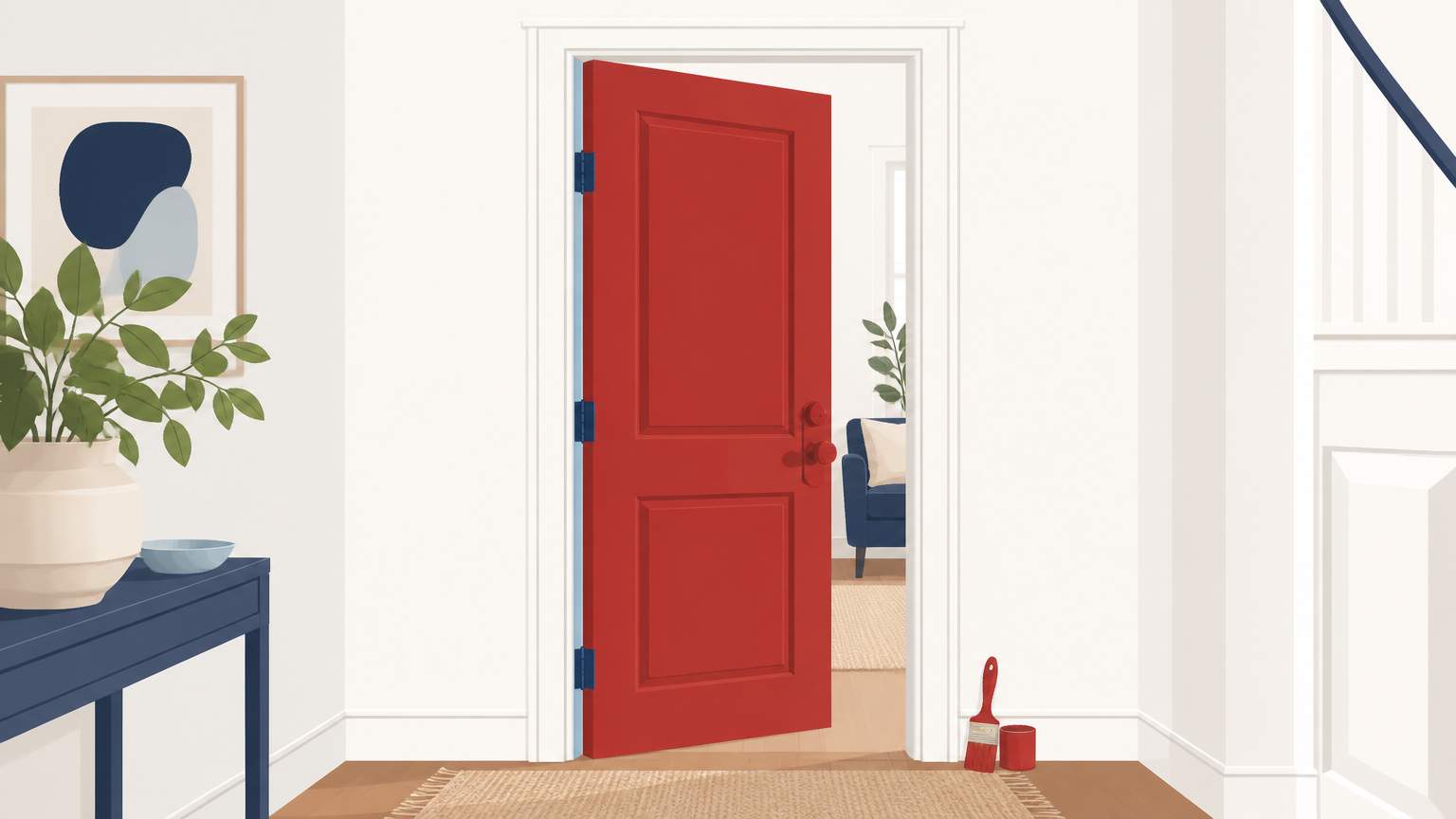
Interior doors are often disregarded, though they significantly contribute to a home's security and comfort. An old, rattling door can lose air conditioning during a hot Florida summer, while a flawless door adds to the security of the room. Fortunately, you can usually carry out necessary upgrades with just a Phillips screwdriver, a few inexpensive supplies, and a little time.
Replacing an outdated interior door hardware set, sealing off leaks with weatherstripping, and meticulously adjusting hinges or sliding door rollers can enhance security and efficiency without needing a contractor.
This project also allows you to refresh the door’s appearance. A quick scrub with a damp cloth followed by a paint touch-up hides wear, protects the wood, and gives it a polished look that fits the rest of the house. Most tasks fall into the realm of handyman projects, meaning you have full control over expenses and timing while achieving noticeable results.
You will need a flat-head screwdriver, a Phillips driver, and the new lockset you wish to install. Most come with an instruction sheet, and the basic steps remain the same: detach the knobs from both sides, remove the existing latch plate, and insert the new latch into the edge of the door. When you open the door, check that the latch bolt slides smoothly; a misaligned bolt may cause problems later.
Next, align the new strike plate on the door frame, marking the exact spot with a pencil. Drill pilot holes before securing the plate with screws. Test the lock, ensuring the bolt engages properly from both sides. This task typically takes 30 to 45 minutes, and a quality residential lockset costs between $30 and $80, making it an economical security enhancement.
Once the lockset is in, focus on sealing the perimeter. Use peel-and-stick weatherstripping for interiors; it sticks directly to the door frame and compresses when the door closes, reducing air leakage significantly. Cut the strip to size with a utility knife, press it down firmly, and trim excess.
Examine the hinges and any sliding door rollers if necessary. Tighten loose screws in the hinges with a screwdriver, and if a hinge pin is misaligned, tap it back in using a hammer and wood block. For sliding doors, find the adjustment screws on the rollers—often at the bottom of the track—turning them to raise or lower the door to let it glide smoothly. A well-aligned door stops drafts and minimizes hardware wear.
Finally, give the project an interior paint touch up. Lightly sand damaged areas, wipe away dust, and cover with a thin coat of matching paint, blending the edges. Allow it to dry before closing the door. This final touch protects the wood and helps the door match the newly upgraded hardware.
Structural issues, such as damaged door frames and missing strike plates, or a door no longer fitting the opening, usually require a licensed contractor. Most upgrades are safe for a handyman; however, anything beyond typical DIY should be left to professionals.
.svg)
.svg)

.svg)
