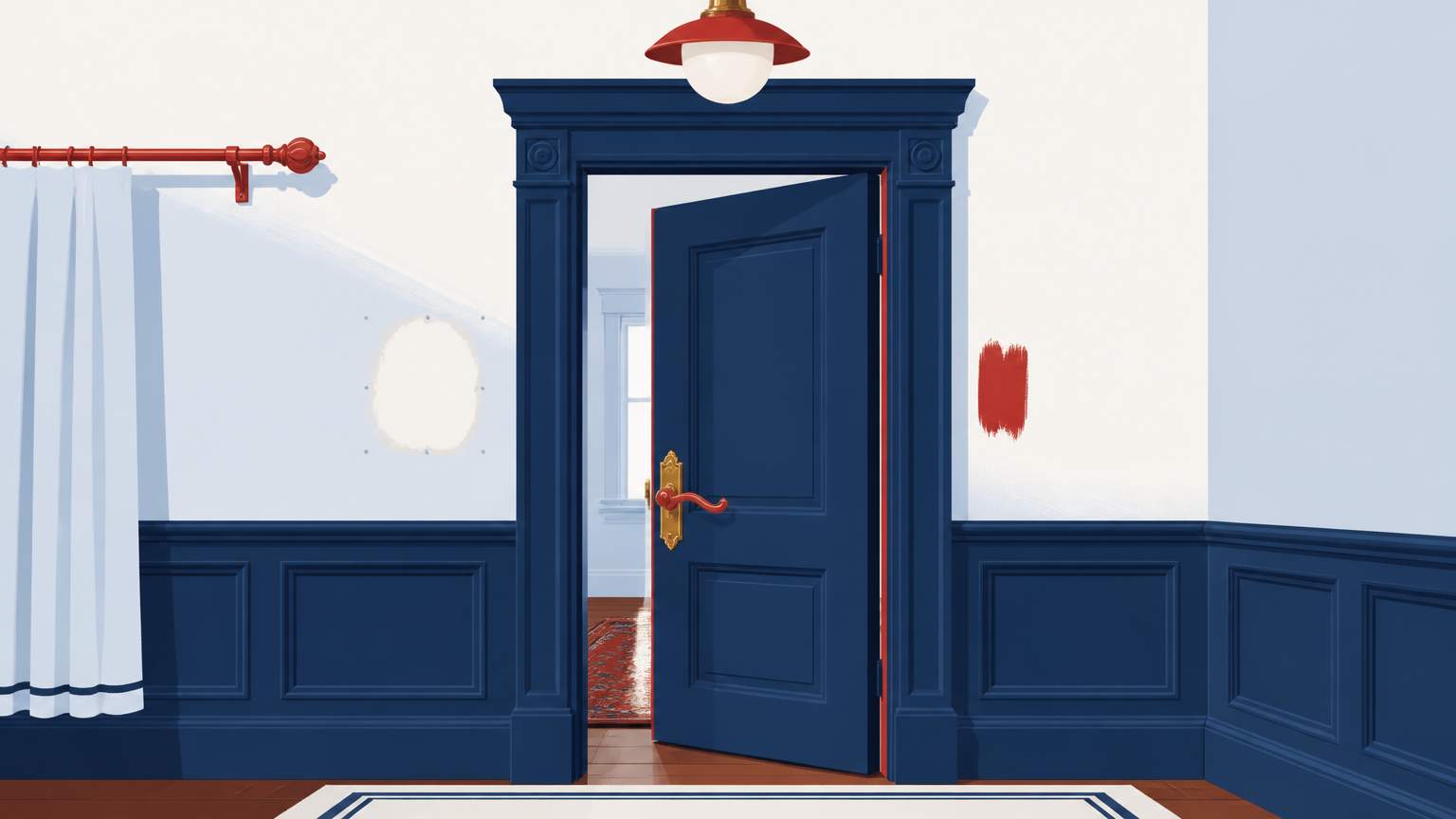
Historic interior doors often stick due to weather conditions, particularly in humid Florida. Swollen panels, loose hinges, and worn hardware can turn a smoothly functioning door into a problem. Fortunately, most of these issues can be resolved without the need to replace the door, and doing so can help maintain its original appearance as well as energy efficiency.
To determine how to fix a sticking door, you first need to locate the source of the problem. Common causes include misaligned hinges, swollen door panels, or old hardware. Check the door's movement as you open and close it. If you observe resistance on one side, the hinges may be misaligned. If the edge rubs against the frame, the door could be swollen or the jamb shifted. Measuring the door's clearance against the jamb may also reveal gaps that are too wide or too narrow.
Once you understand the source of the problem, you can choose an appropriate solution and repair process. For many Florida homeowners, correcting a sticking door can be done within two hours and for less than $150, often requiring only new hardware.
Acquire a few essential tools and materials: a screwdriver set, a drill with a 1/4-inch bit, a sander, wood filler or epoxy, and a set of hinges that match the originals. If the door edge is warped, a hand plane or electric planer can help.
After straightening the door, replace or tighten the hinges. Remove the old hinges, clean the surfaces, and install a new set of hinges matching the original design. For additional smoothness, consider purchasing a low-friction door hardware kit.
If humidity warped the door, you might add smart hardware. A keyless lock or smartphone-controlled lock can preserve the door's features while adding modern convenience. Retrofitting is usually straightforward and can qualify for historic preservation tax credits.
For frame shifting or a damaged jamb, substitute with wood filler and paint.
In most cases, a competent homeowner or handyman can handle this. However, if the door's frame is cracked or the jamb is highly warped or damaged, a licensed contractor may be necessary. If you live in a historic district and are making structural changes, a historic-preservation review may also be required.
In sum, sticking historic interior doors can often be fixed with proper tools and materials, and an analytical approach. The process is usually inexpensive, and it can improve comfort and efficiency. However, consulting a licensed professional is the best route if the door is beyond repair.
.svg)
.svg)

.svg)
