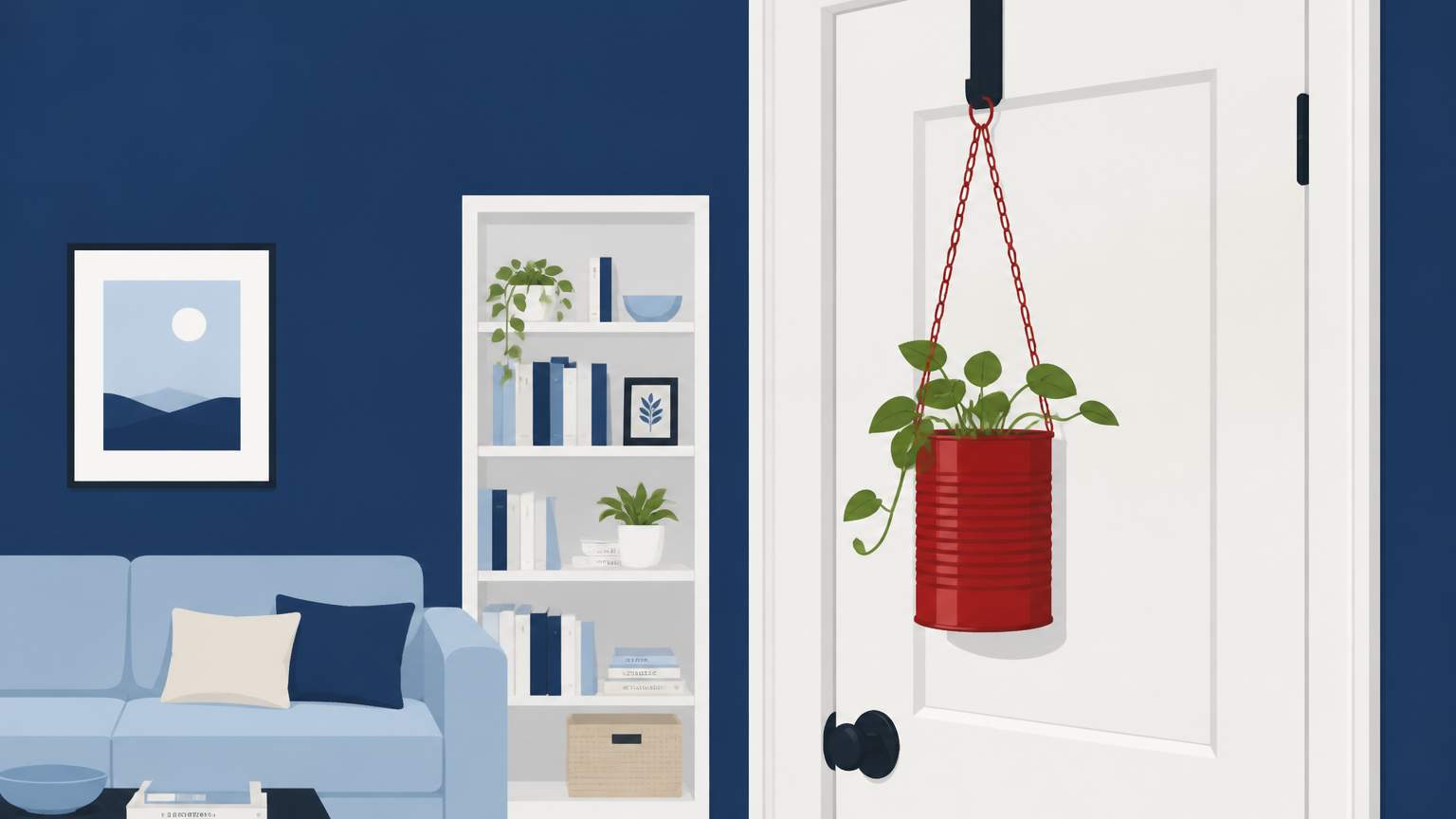
A Florida homeowner has transformed three standard tin food cans into a delightful hanging planter, bringing vertical charm to a balcony or porch. The project utilizes a basic drill, spray paint, outdoor-grade decoupage glue, and a decorative chain, typically used as door hardware for screen doors. This creation offers space-efficient, low-maintenance gardening while safeguarding the cans from humidity and storms and allowing for easy access to the plants.
Start by washing the cans with dish soap to remove any labels and residues, ensuring they are completely dry. Apply two coats of a rust-inhibiting primer followed by an exterior-grade paint for a smooth and weather-resistant finish that withstands Florida’s high humidity. Once the paint has dried, cut paper napkins into small squares and adhere them using outdoor-grade decoupage glue. This glue, with its UV stabilizers and moisture-blocking acrylic-urethane hybrid, prevents cracking as the can expands and contracts. Line the bottom of each can with a thin food-grade silicone sheet to separate the soil from the metal and to lessen corrosion. Finally, drill a drainage hole at the lowest point in each can using a 3/16-inch bit, ensuring it is centered for quick excess water escape. To hang the cans, thread a sturdy decorative chain—often found in door hardware for screen doors—through the holes and tie it to maintain even balance. The chain can be attached to a door rod or a balcony rail that is part of your home’s door hardware system.
The chain used for this planter matches the industrial chains available for screen door catches and door trim. Attach the chain to a door rod or a robust balcony rail that can bear the weight of the soil and cans. To protect the rail, place a small rubber pad or a piece of wood between the chain and the rail; this helps in distributing the load and prevents scratches. If a more permanent solution is desired, install a short metal bracket that clasps onto the rail, then loop the chain through the bracket’s eye. The bracket should be tightened just enough to secure the chain without warping the rail.
When hung, the chain’s weight keeps the cans level, while the drainage hole prevents water accumulation against the metal. This simple setup protects the cans from rust and maintains plant health in Florida’s storm-prone climate.
This finished planter can be hung on a porch eave, a gazebo rafter, or a sturdy balcony rail. The vertical position allows easy access to the plants for watering and care, minimizing the need for bending or kneeling. By reusing cans that might otherwise be discarded, homeowners can contribute towards waste reduction and create a charming, space-efficient addition to their outdoor space. This project demonstrates how everyday items can be repurposed for sustainable living and stylish interior design.
.svg)
.svg)

.svg)
