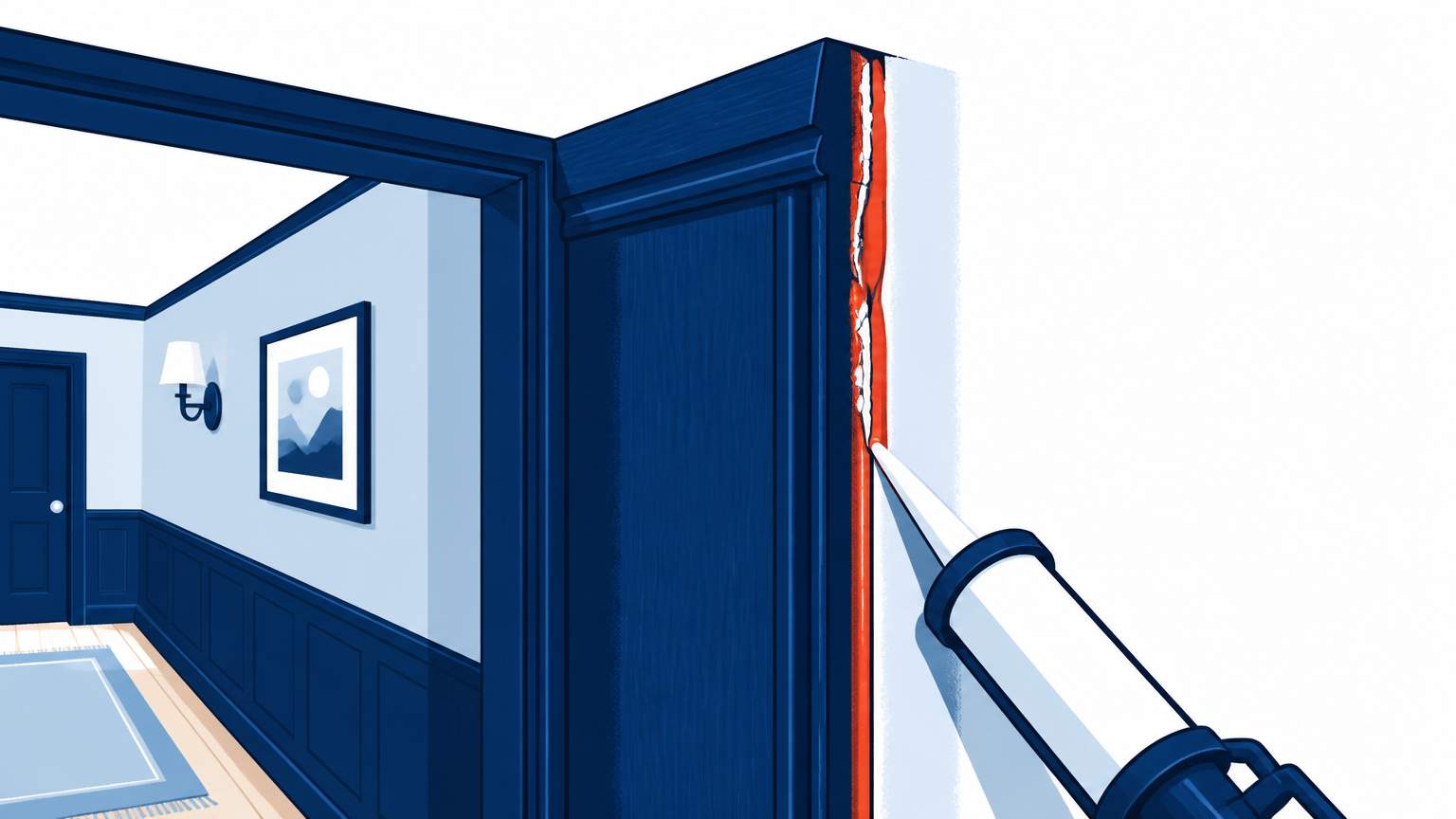
The National Hurricane Center has reported that Dolly's remnants could cause heavy rainfall in the Florida panhandle. Even after downgrading to a tropical depression, the storm still holds enough moisture to potentially release 2 to 4 inches of rain in certain areas, as noted by the National Weather Service. If there are gaps in old caulk, rainwater may enter and damage the window frame, trim, drywall, or insulation. Resealing the visible seams on the exterior is an easy fix to help avoid expensive interior damage.
Humidity and rain in Florida can make caulk break down faster. A missing or cracked bead can let rain and wind into your home. Using a flexible and UV-resistant sealant keeps the window frame tight when storms hit. It is recommended to use a continuous bead of Urethane-based caulk since it holds up well and can tolerate movement.
Check for visible cracks in the caulk around the frame or gaps between the frame and the wall. Water stains on the sill or inside the trim usually mean the old caulk is compromised. Mold or mildew growth along the seam is another sign that the seal is failing. If any of these issues are seen, the old caulk likely needs to be removed before applying a new bead.
With incoming rain from Dolly, it can find its way in through the smallest gaps. According to the National Weather Service, gusty winds of 30 to 40 miles per hour could whip rain off the roof and force it through weak spots. A single cracked bead can allow for water intrusion, risking damage to the trim and possibly the wall. Resealing the exterior before the rain hits can provide a better chance of the window staying dry.
To start, remove any old caulk using a utility knife or caulk removal tool. After cleaning the area with a mild detergent, let it completely dry. If there are gaps larger than 1/4 inch, place a backer rod in to fill the space and provide a smooth surface for the new sealant. This will stop the new caulk from breaking under pressure.
Apply a continuous bead of Urethane-based caulk along the seam. Keep the caulk flowing by using a caulk gun, and smooth the bead with a wet finger or caulk-smoothing tool. Aim for a 3/16-inch bead that completely covers the joint. Permit the caulk to cure for at least 24 hours before exposing it to rain.
After the first heavy rain, check the seal for any cracks or separation. If there are new gaps, repeat the process. Regular checks after storms can help catch any problems before they worsen.
Resealing exterior caulking is a low-cost maintenance project that can be of high value for Florida homeowners facing rain. By getting rid of cracked or missing caulk, you can reduce the risk of water damage inside the home and help keep your trim and windows in good condition longer. If the damage is extensive, or if there are structural issues, consider calling a licensed professional to look it over.
.svg)
.svg)

.svg)
