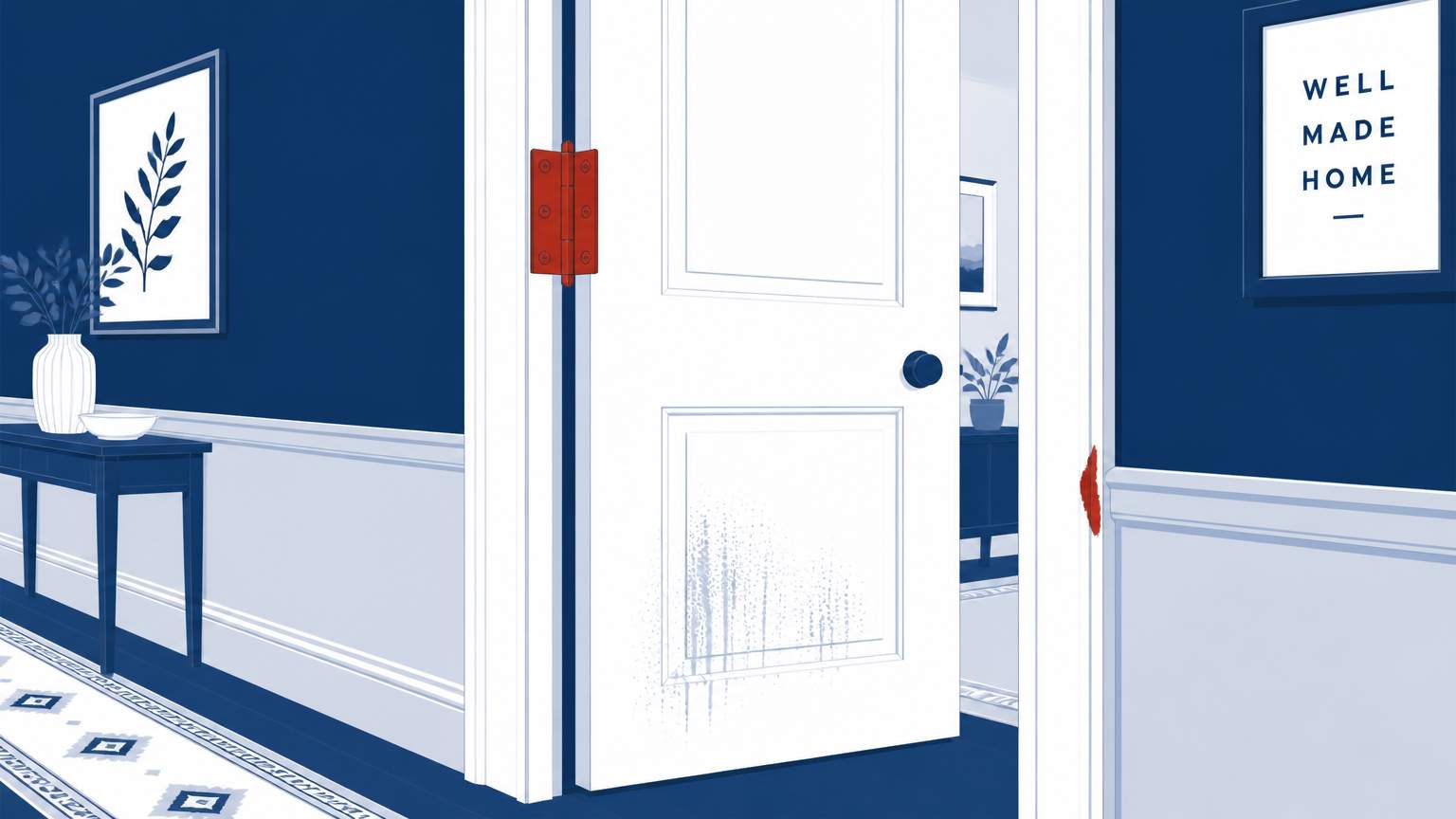
A moist basement can turn a well-functioning interior door into a problematic one. When water enters through the foundation, it can raise the humidity levels in the house, expand the wood of the door frame, and misalign the hinges. This leads to a door that sticks or won’t close properly. Homeowners in Florida can often address the moisture issue and repair the door without needing a contractor.
A key indicator is efflorescence, which appears as a white, powdery deposit on basement walls and indicates water movement through the concrete. This moisture can reach wall cavities and the door frame, causing the wood to swell. As the frame expands, the door can no longer fit within its jamb, and the hinges can become misaligned. Even slight swelling can lead to dragging or jamming. It’s noted by the EPA that radon-seal coatings aren’t effective moisture barriers, so applying them to damp walls won’t solve the moisture issue. Focus should be on drying out the wall and sealing cracks, followed by treating the door itself.
Assess the Door and Frame Start by removing any paint or trim that might conceal warped wood. Examine for gaps between the door and jamb, and ensure the hinges are flush. If bent, replace the hinges with new american door handles or a hinge set from a local door supply store.
Trim and Level the Frame Trim any swollen sections of the jamb using a hand saw or jigsaw. After trimming, insert thin wood shims to level the frame and restore proper clearance for the door.
Realign the Hinges Loosen the screws of the hinges, adjust the door for an even hang, and retighten the screws. If there is still an issue with the door swinging, consider replacing the hinges with a new door group that includes a lockset and a smooth latch.
Install a New Door Sweep A missing or damaged door sweep can allow moisture inside. Install a new door sweep to seal the bottom of the frame, reducing damp air from entering the home.
Use a Vapor-Permeable Finish Once the door and frame are dry, paint with a water-based paint. The vapor-permeable finish allows moisture to escape while protecting the surface. Avoid thick, non-breathable sealants that could trap moisture.
Seal Gaps Around the Door Fill any gaps between the jamb and wall with silicone caulk to block drafts and keep the interior dry. For a sliding door that sticks, adjust the rollers, replace any screen spline, and seal the track.
Address the Basement Moisture Source While the door adjustments are temporary solutions, the root moisture problem needs attention. Check grading around the foundation, clean gutters, and consider adding a perimeter drain or dimple board. If you intend to install a pet door for storm door installation or a new storm door window repair, ensure the frame is sealed and the interior is dry.
If the door remains stuck or signs of cracks or mold appear, consult a licensed contractor. A professional can assess the foundation, install proper drainage, and help maintain a dry basement.
.svg)
.svg)

.svg)
