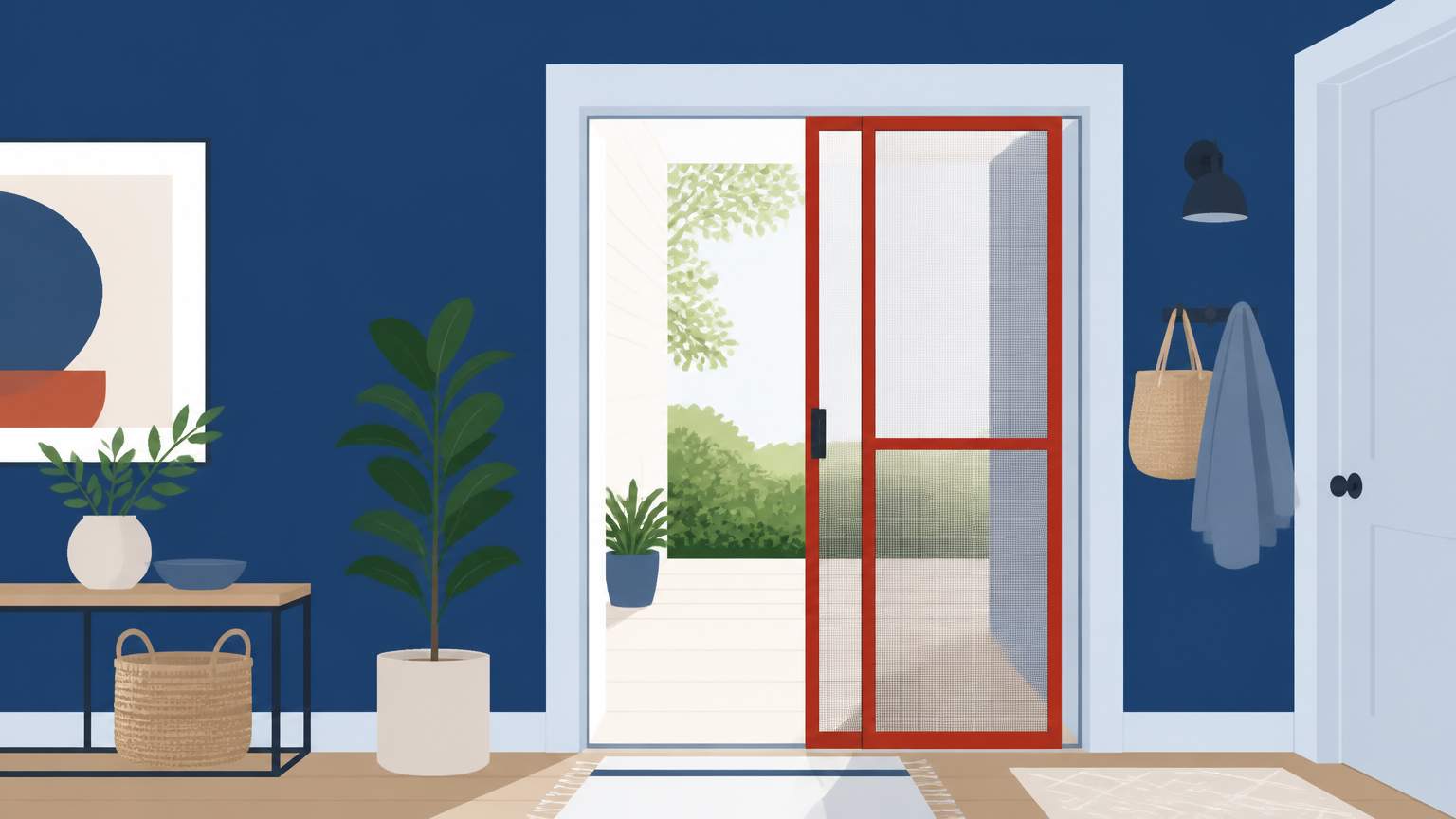
As temperatures drop in late summer, small mammals like raccoons and squirrels look to invade homes across Florida for warmth and shelter. Installing a screen door on your sliding patio door can effectively block these critters while also shutting out insects and reducing drafts. This handy project, which most people can accomplish over a weekend, requires basic tools and a pre-cut screen door kit.
Look for small gnaw marks on the door frame, feces around the threshold, or more insects than usual when the weather cools down. These are signs that wildlife has found a way inside. In Florida, high humidity can cause caulk to crack or shrink, allowing creatures to squeeze through. A properly fitted screen door complements existing weatherstripping to seal off these openings. With a screen door in place, the door’s weatherstripping continues to seal effectively, while the screen prevents larger animals from entering while allowing for some ventilation.
Begin by removing the existing door panel or sliding door track, if necessary. Measure the width and height of the opening and cut the pre-cut screen door accordingly. You will need a drill and screwdriver to attach the screen door’s mounting brackets to the frame. Use a utility knife to trim away any extra screen material to ensure a snug fit. Seal the perimeter by running a bead of silicone caulk where the screen meets the door frame. The flexibility of silicone in Florida’s humidity allows it to resist cracking. If any larger gaps remain, you can use a small amount of expanding foam, but do this carefully to prevent the foam from expanding too much and damaging anything.
Once sealed, reinstall the sliding door track, double check that the door operates correctly. It should slide smoothly without catching. If it feels stiff, check the screen and the weatherstripping. A flashlight can help find any remaining gaps—a dark spot indicates a draft that may need additional caulk.
One common mistake is not cleaning the frame before starting the project, which can leave debris or old caulk that interferes with sealing. Avoid using thin mesh that rodents can chew through. It’s also easy to forget to seal the frame completely, which can allow air or animals to come through. Clean the frame carefully, select a mesh rated for wildlife exclusion, and be sure to run a continuous bead of silicone caulk around the entire perimeter. If you see cracks in the existing weatherstripping, replace it with a new high-quality strip before starting.
If the weatherstripping on the door is worn or missing, it will need to be replaced before putting up the screen. This improves the seal and reduces energy loss. You may also need to adjust the sliding door’s track or rollers to accommodate the added weight of the screen. Finally, you can tighten hinges or add shims to keep the door square, as misalignment can cause gaps for critters to slip through. A quick inspection can reveal any adjustments or replacements needed for locks or handles.
Adding a screen door to a sliding patio door is a smart move for Florida homeowners. It keeps creatures out, improves air quality indoors, and saves on heating costs during colder months. Follow these steps and avoid common pitfalls to safely and effectively keep your home wildlife-free and comfortable.
.svg)
.svg)

.svg)
