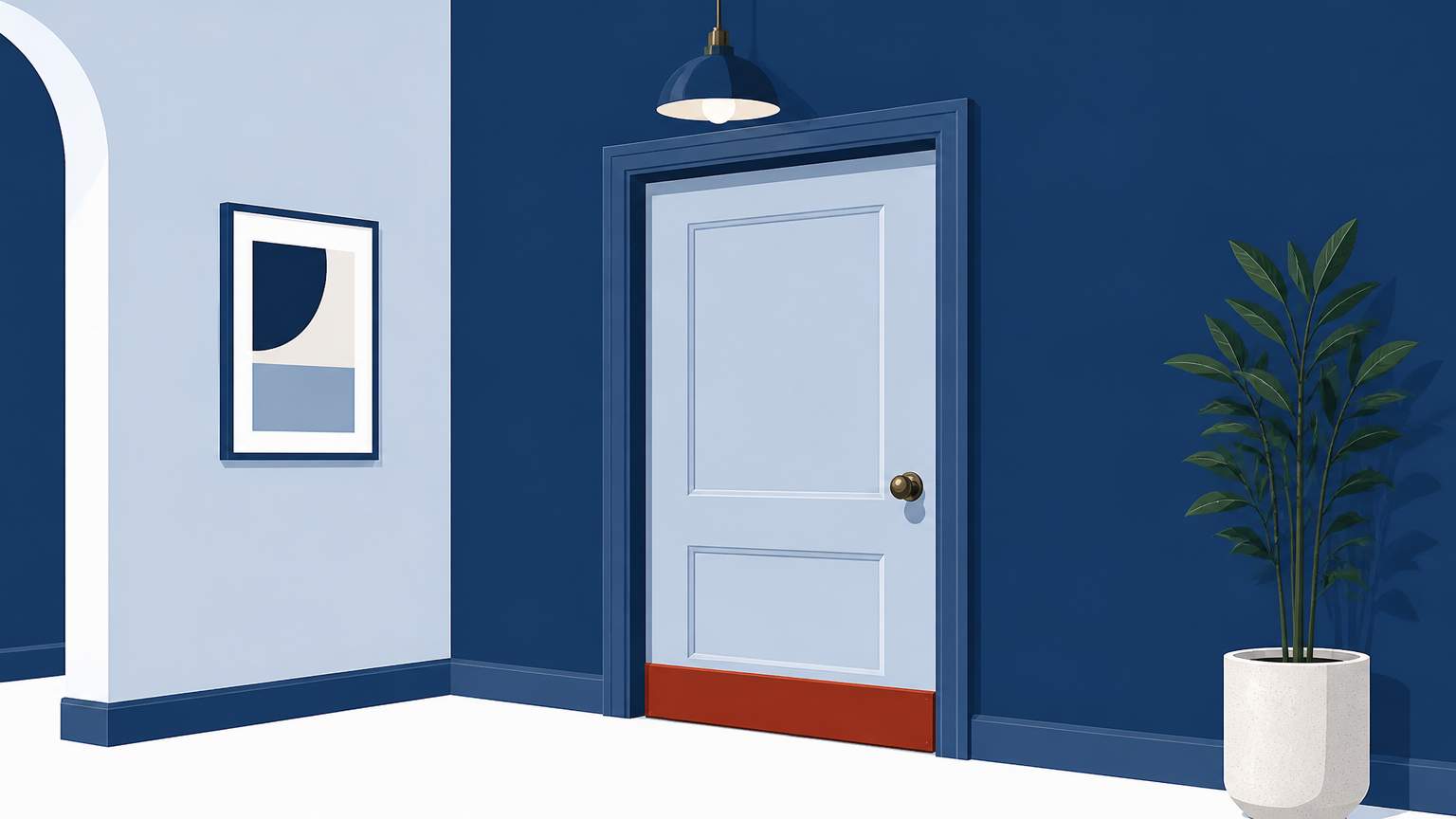
Door drafts are a significant source of indoor humidity and energy loss in Florida, where heavy rainfall and high humidity are common. Installing a door sweep can help block these drafts. A door sweep can be installed using only a hammer, utility knife, and screwdriver, and most cost between $10 and $30. Look for one with a rubber seal that fits the door width just right, so it’s snug enough to seal without dragging on the floor.
To start, you’ll need to measure the door width and the gap between the door and the threshold. A door sweep that’s too long can snag, while one that’s too short may leave gaps. Choose a sweep that has a rubber seal or a rubber strip filled with silicone, which resists mold and maintains its flexibility in temperature fluctuations. If you’re installing it on a sliding door, a low-profile sweep that fits underneath the door is best. If it’s a standard hinged door, then opt for one with a heavier carrier to withstand rain.
Think about the door and threshold materials. A wooden step may require an adhesive designed for wood, while concrete can tolerate a metal carrier. Home improvement stores are likely to carry a variety of sweeps, and you can even find screen door supply and install kits that include them. If you’re replacing your home depot storm door screen replacement, now is a good time to pair it with a sweep.
First, clean the bottom edge of the door and threshold so they’re free of old sealant or debris. If the door handles need repair or the hinges need to be tightened, do that first. Measure the sweep to ensure it fits and cut it to length, if needed. Most sweeps come with a pre-cut length, but some models are cut-to-size, and you may need a utility knife.
Place the sweep on the threshold, aligning the rubber seal with the floor. Use a level to ensure it’s flat; a slight slope towards the door is preferable to a steep angle. Mark the holes on the threshold to drill pilot holes, so you don’t crack the material. Use the supplied nails or screws to secure it firmly. If yours comes with a rubber strip to be glued, add a thin bead of construction adhesive along the edge of the strip before pressing it into place. Allow the adhesive to cure for at least a day before using the door.
To test the effectiveness of your work, close the door and look for gaps. If there are any openings, seal them with a bead of silicone caulking along the threshold, much like you would when recaulk exterior windows. After a rain, inspect the sweep and hallway. A properly installed sweep should block any water from seeping in.
If the door has warped, the threshold is uneven, or the frame needs work, a contractor can provide better insight. For jobs like replacement door installation or installation of a storm door, hiring a professional ensures the new door fits the structure. Otherwise, a door sweep is a simple, DIY-friendly project that will keep both humidity and costs down.
.svg)
.svg)

.svg)
