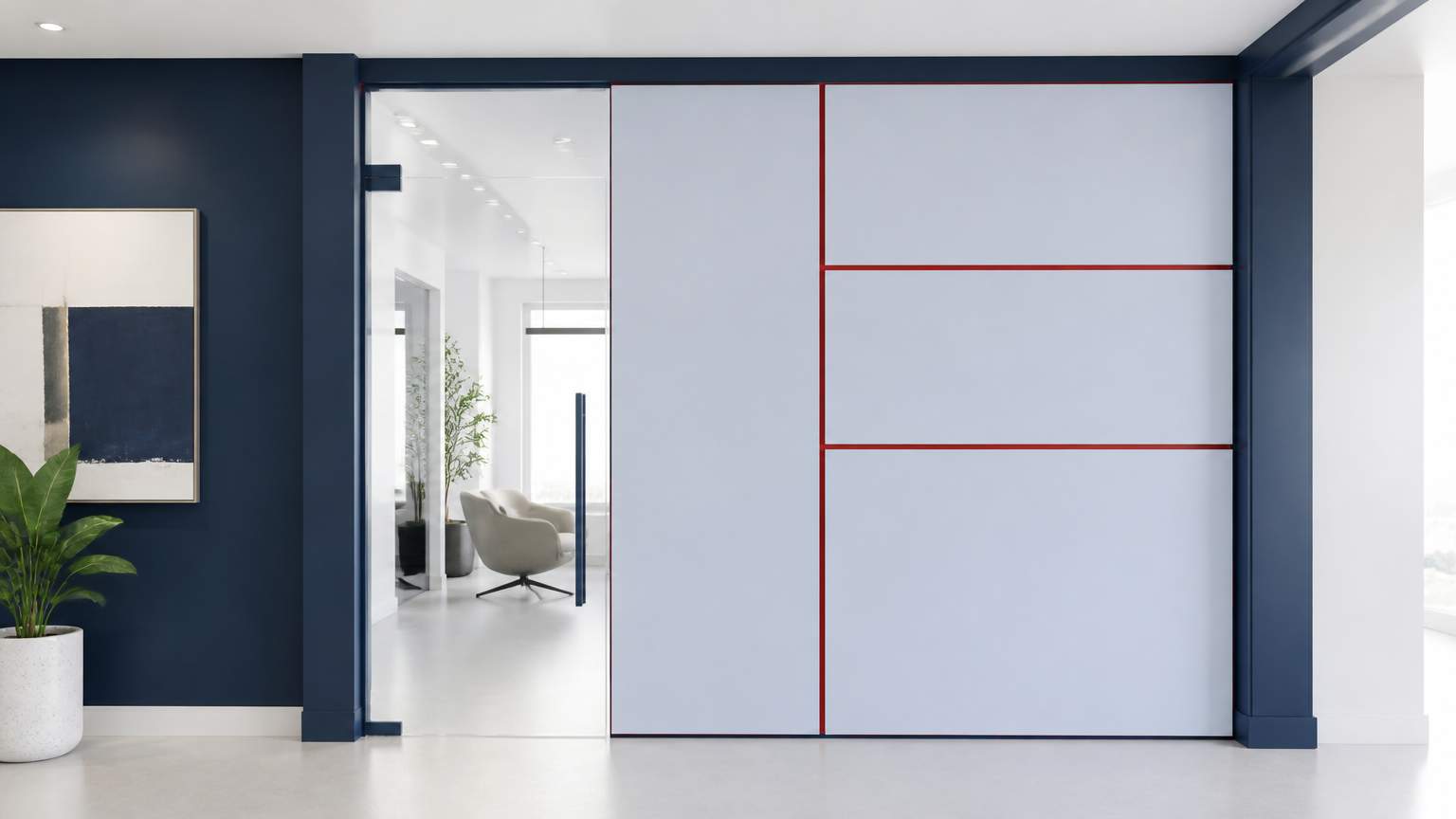
You can make a glass door look fresher by attaching flat, painted PVC panels to it. This can be a good option in a place like Florida where humidity and heat can make a glass door feel stale. However, achieving a long-lasting bond requires using a flexible adhesive that can resist moisture and temperature changes. Proper surface preparation and a test run on a small area before the full installation are also essential.
The best choice is often an MS-polymer adhesive. The Adhesive Library suggests this type of polymer because it matches the stiffness and surface energy of both the PVC and glass. It offers strong initial adhesion and is flexible enough to accommodate any movement between the two materials. One good option is Sika Stixall Maximum Grab, which is a one-part, moisture-curing hybrid sealant. This product is great for outdoor use as it can be applied to wet surfaces, is waterproof, and can withstand temperatures from –40 °C to +100 °C, making it suitable for humid climates.
Another option is to use a two-part structural silicone, like Dow Sil 993, which has a wider temperature range of –50 °C to +150 °C and excellent UV resistance, but it may be more than needed for regular indoor use. Two-part epoxy bonds tend to be brittle and can crack with temperature fluctuations, requiring tougher or flexible grades. However, the standard type is not suitable for Florida's climate.
You should first prepare the surfaces. Clean the PVC panels using isopropyl alcohol and wipe the glass with a lint-free cloth to remove any oils and dust. Once the surfaces are dry, put a small bead of the chosen adhesive on a test coupon—roughly the size of 2 inches by 2 inches—of an extra panel. Allow the coupon to cure for the time recommended by the manufacturer, then flex the panel slightly to simulate temperature expansion. If the bond remains intact without cracking or coming apart, the adhesive should be appropriate for the complete installation. This is called a coupon test and is a practical, low-cost method to confirm performance before proceeding.
Once your adhesive has passed the coupon test, lay the PVC panels over the glass door with a bond line of around 1/8 in. Apply the adhesive in a steady line, ensuring even coverage and being careful not to use too much. Firmly press the panels against the glass, using a roller or flat board to apply even pressure. Use masking tape or a light clamp to hold the panels in place until the adhesive sets, typically in 24–48 hours for most MS-polymer products.
After the curing period, inspect the junction for any gaps. If you see any spaces, add a thin layer of clear, paintable sealant to fill small voids and protect the bond from moisture. The finished panels should offer a seamless appearance, and the adhesive should retain its strength under Florida's heat and humidity.
For additional hardware, such as door handles and window trim, you can visit a local door hardware store to find appropriate parts. For example, a door knob or storm door lock can be installed post-panel application, and the same surface prep applies to new hardware that touches the glass or PVC. For more extensive projects—like replacing a door with a window or installing a sliding door where a window was—it's best to consult a licensed contractor, as these tasks are beyond the skill set of a typical handyman.
To sum up, a flexible MS-polymer adhesive, effective surface prep, and a quick coupon test can give Florida homeowners a reliable bond for PVC panels on glass doors. This allows for a stylish faux French door upgrade without the need to replace the entire door.
.svg)
.svg)

.svg)
