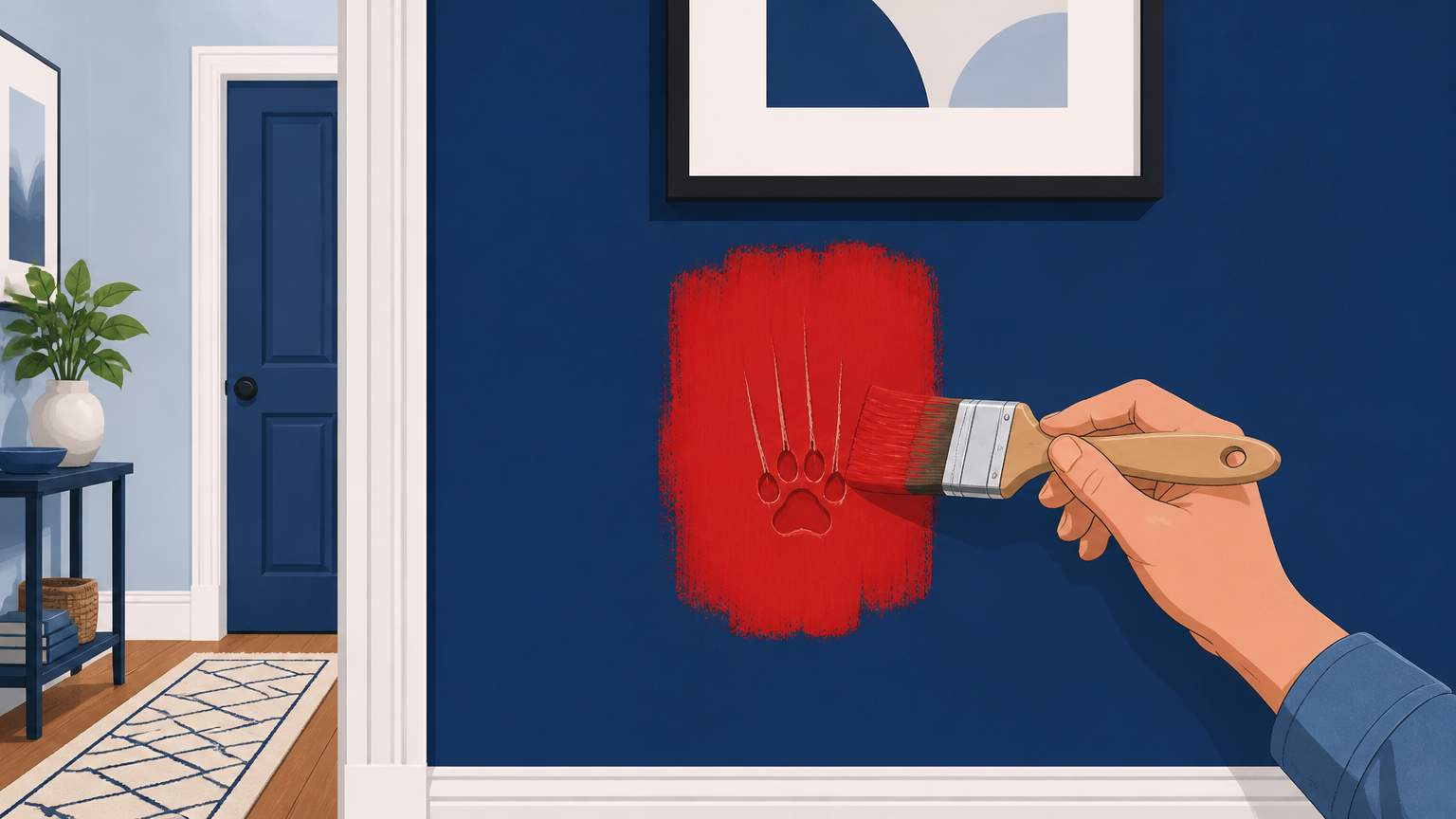
Cats have a tendency to scale walls and often leave their mark behind. In humid places like Florida, paint can seep into damaged sections of drywall, making repairs noticeable. A single scratch can become a recurring nuisance if the texture of the area remains the same. Here is how to fix the damage and add a wall covering that deters further scratching.
Start by identifying the wall material, whether it is drywall, plaster, or a specialty panel. According to PetMD, cats are attracted to vertical surfaces that are firm yet slightly rough, typical of unfinished plaster or textured drywall. If the wall is drywall, a low-odor primer and joint compound will help fill in the scratches without soaking into the area surrounding them. Home Depot’s guide suggests cleaning the area, applying the compound in thin layers, sanding it smooth, priming, and repainting with a matching finish. For plaster, This Old House recommends a plaster patch kit that comes with a bonding agent and ready-mixed plaster, applied in thin layers. Proper surface preparation is key to preventing uneven paint absorption, an issue highlighted by a Reddit user concerned about paint soaking into the material.
Once the patch has dried, a pet-friendly wallpaper or thin PVC panel can be placed over the repaired spot. These coverings are both wipeable and scratch-resistant and can be removed if the cat's behavior changes. The laminated surface of the wallpaper repels urine and odor, reducing the scent markers that draw the cat to the location. Next, a vertical wall-mounted scratcher should be installed next to the repair. A sisal or carpet-covered post will likely be a more appealing surface for claw maintenance, encouraging the cat to scratch there instead. Regular nail trimming and the use of a pheromone diffuser can also help ease stress-related scratching.
Installing a screen door with a pet door near the damaged area can also help. The screen door serves as a barrier, blocking the cat from the wall while allowing some ventilation. This method is particularly effective near storm doors or window frames, spots often targeted for marking territory. The screen door can be included in a storm door and installation project, providing protection and a deterrent.
For the final coat in Florida's humid climate, use a low-VOC, moisture-resistant paint. Low-odor primer will maintain good indoor air quality, and moisture resistance will prevent future humidity damage. If the wall is part of a load-bearing structure or if you are unsure about the material, consult a licensed contractor before proceeding. Most interior repairs can be completed safely by homeowners using the steps outlined.
.svg)
.svg)

.svg)
