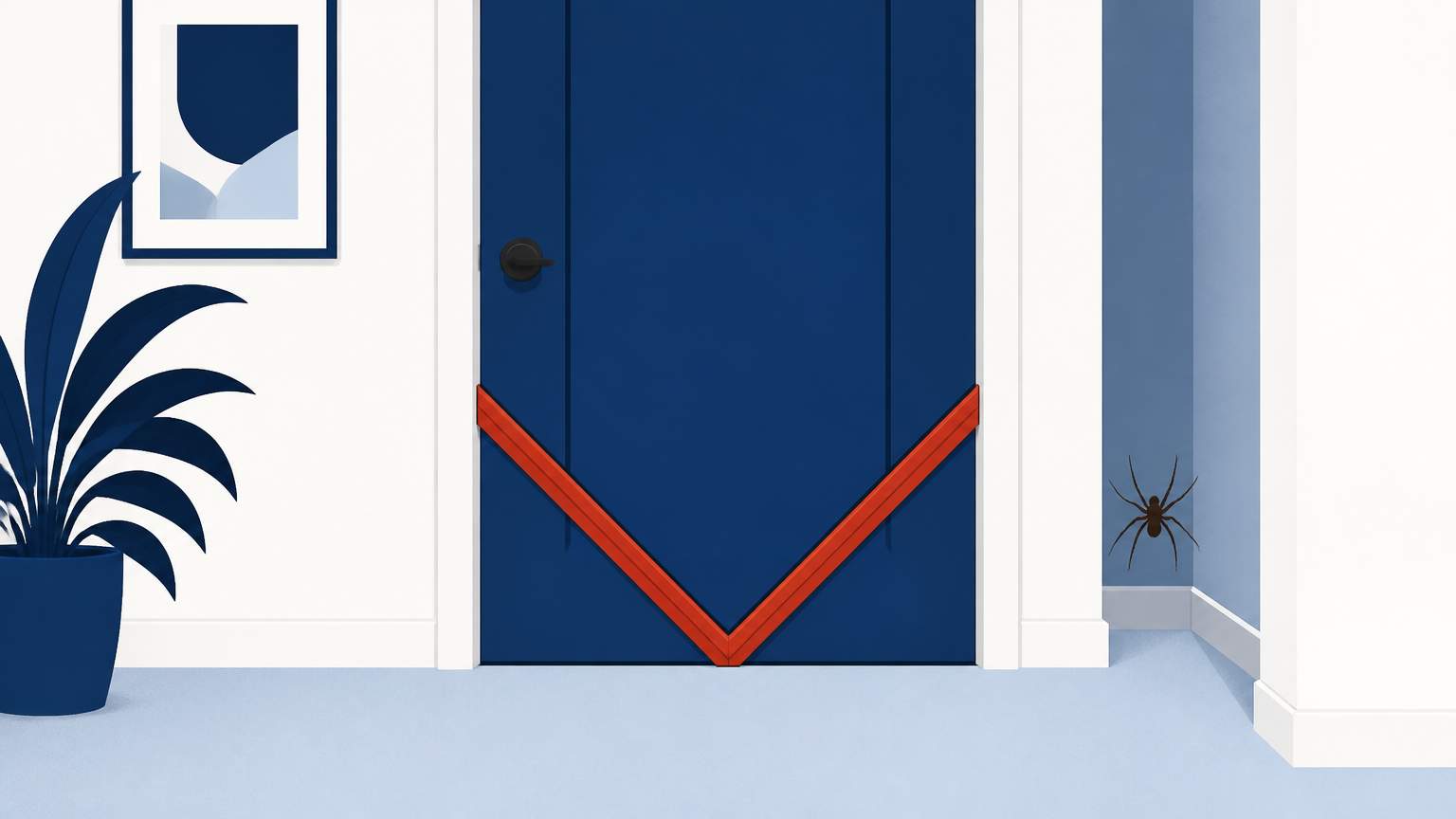
A Florida homeowner discovered an uptick in spider activity and decided to install weatherstripping around the door. This simple solution provides a barrier against the tiny gaps that brown recluse spiders slip through while also reducing drafts. The process is straightforward, requiring no professional help, and offers a dual benefit: sealing gaps and improving energy efficiency.
The homeowner started by gathering the necessary tools and materials, including a utility knife, measuring tape, and a roll of adhesive. They cleaned the door frame before measuring and cutting the strip to size, finally applying it firmly to ensure a tight seal. Closing the door and checking for drafts confirmed the weatherstripping was effective.
To complete this job, you generally need a V-shaped weatherstripping roll, a utility knife, measuring tape, and either adhesive or a small nail set. The adhesive should be suitable for the door's material; standard rubber adhesive works for wood, while metal may need something stronger. A clean cloth to wipe away residue is also helpful.
Brown recluse spiders can fit through gaps as small as one-eighth of an inch. A continuous strip eliminates these entry points, preventing spiders from finding dark spots behind the door. The seal also helps lower indoor humidity, which attracts these and other arthropods.
Weatherstripping is effective for blocking entry, but it won't remove spiders that are already inside. It won't address hidden webs or nests in other parts of the home, and if the strip is damaged, gaps can reopen. Regular inspections and cleaning are necessary to manage existing spider populations.
After installing the strip, inspect the door frame for other gaps and seal them with caulking around windows inside. The caulk should be a flexible type that can withstand slight movements. Keeping the home clutter-free and vacuuming corners can further reduce spider presence. Maintaining lower humidity levels will also make the environment less inviting to spiders.
With these measures, the homeowner can create a substantial barrier against brown recluse spiders, while also improving comfort and cleanliness. The weatherstripping and caulking work together to seal entry points, while cleaning and maintenance remove potential hiding spots. This layered approach aligns with pest-management strategies that focus on exclusion and sanitation. For more complex structural issues, consulting a licensed contractor is recommended.
.svg)
.svg)

.svg)
