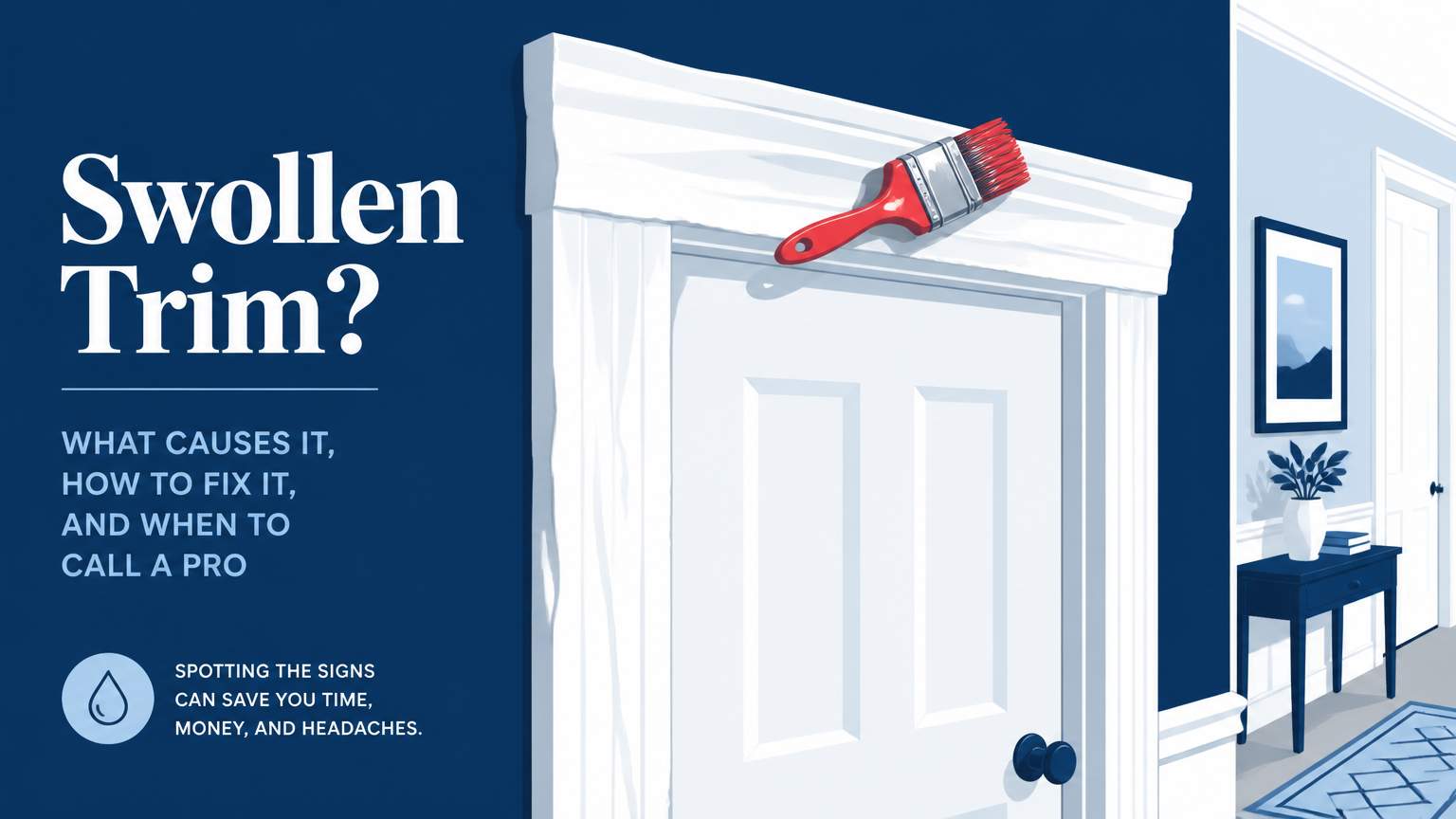
In Florida, mopping hardwood floors with excess water can lead to swollen wood trim around interior doors. This swelling may cause the trim to warp or cup, creating friction against hinges and making doors stick or squeak. Initially, the damage might not be obvious, but if ignored, it could worsen and affect the door frame's function and appearance.
This issue can also affect other parts of the door area. If moisture reaches the baseboards or threshold, it can impact the door jamb, potentially causing the door to shift or the hinges to loosen. Since the trim, jamb, and floor are made of the same wood, they will respond similarly to moisture. Fortunately, a quick fix is possible, but it requires a careful approach to restore the trim's shape and protect it from future swelling.
The main cause is over‑wet mopping. Using a saturated mop or steam cleaner allows water to seep into the wood grain. Even sealed floors can emit vapor through tiny gaps, increasing the moisture content in the trim. This moisture causes the wood to expand, resulting in a cup or kink that obstructs the door's movement. The humid Florida environment can exacerbate the situation, prolonging the moisture’s presence.
Another contributing factor is the delay in drying. Leaving the floor damp allows water to move along the baseboards and into the trim. The longer the moisture remains, the more the wood fibers swell. This can lead to a warped trim that may also lose its protective finish, making it susceptible to stains and scratches. Early intervention often reverses the damage, but waiting too long can result in permanent deformation.
Start by soaking up any excess water on the floor with a clean, dry microfiber mop. A damp microfiber mop should be used as little as possible—just enough to pick up dust without soaking the surface. After the floor has dried, check the trim for signs of swelling. If the distortion is minor, gentle sanding can help. Use fine-grit sandpaper and sand along the wood grain to avoid gouging.
Once the trim is level, fill any gaps or cracks that have opened with wood filler. Follow the manufacturer's instructions for drying time, then sand the area smooth. This process helps restore the trim's shape and provides a uniform surface for painting. After sanding, wipe the trim with a tack cloth to remove any dust before painting.
Re-coat the trim with paint that matches its existing finish. A high-quality interior paint will help protect the wood from future moisture. If the trim's finish is damaged, consider applying a clear coat or wood sealant that is compatible with the paint to offer extra protection against water penetration.
Finally, check the seal around the door frame. Apply caulking around the jamb and threshold to prevent water from entering the trim area. Choose a silicone or acrylic caulk rated for interior use. Smooth the caulk with a wet finger or caulk tool to ensure a good seal. This step is key to preventing future swelling and maintaining a clean environment around the door.
If the swelling is significant or the trim is severely damaged, a replacement door installation or new trim panel may be required. A professional can determine if the jamb or hinges need adjusting. For instance, if the door has shifted, the window door hinges may require realignment or replacement with American Door Hardware for better support.
When should you contact a licensed professional? If the trim is severely warped, the door no longer opens smoothly, or the jamb shows signs of rot, a licensed contractor should evaluate the situation. A general contractor can handle more extensive repairs, such as install doors and windows or repair screens for windows, ensuring all work complies with local building codes.
By following these steps, Florida homeowners can restore their interior door trim, keep doors functioning properly, and protect their floors from future damage caused by excessive mopping.
.svg)
.svg)

.svg)
