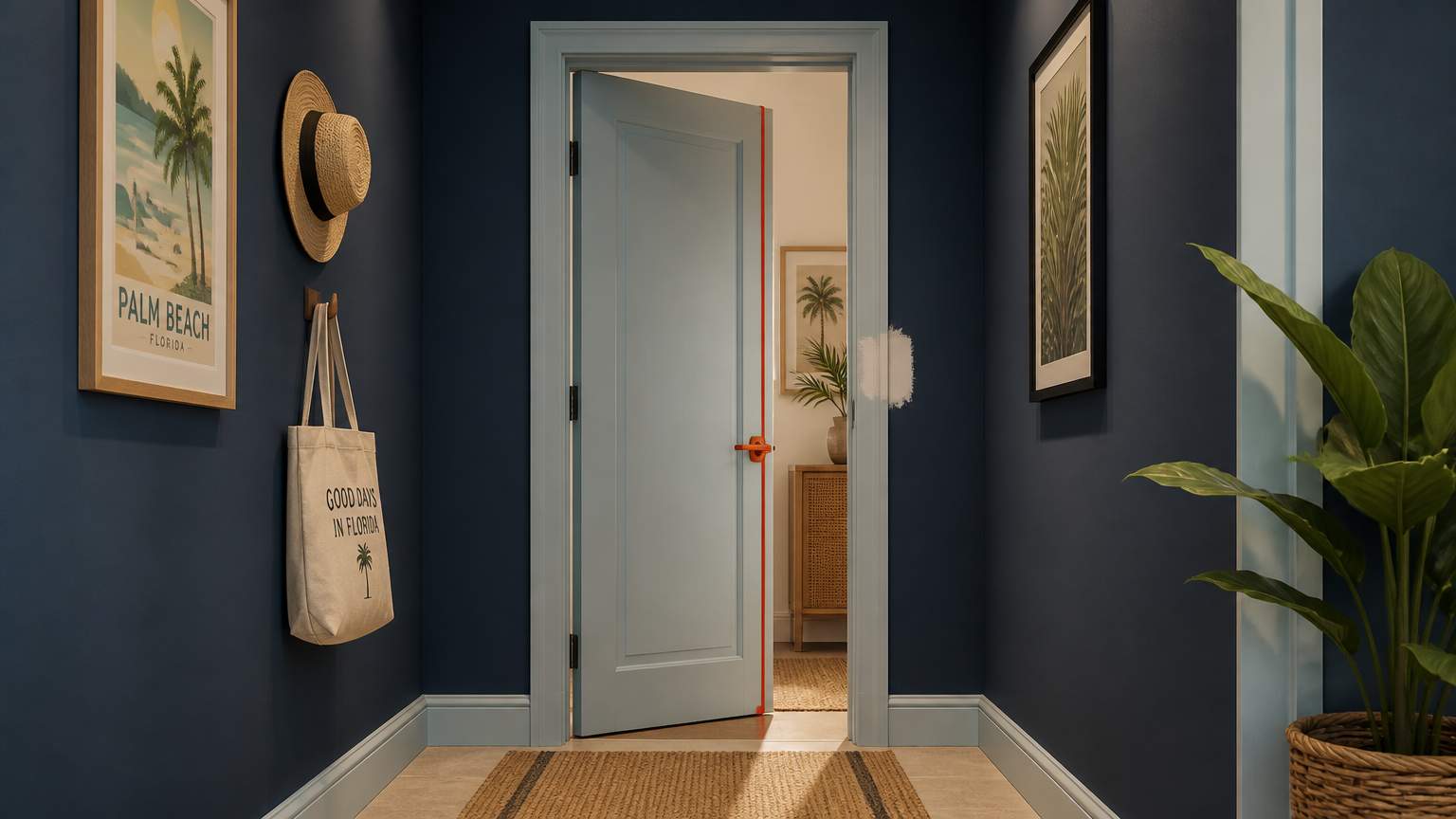
In Florida homes, a sticking door or a door that doesn't close tightly can lead to a dangerous backdraft of combustion gases. The combustion appliance zone (CAZ) is meant to keep gas appliances safe, as outlined in ASHRAE and BPI standards, which dictate a maximum negative pressure of –5 Pa. Even a small draft around an interior door can push the CAZ pressure below this limit, leading to backdraft that poses risks to occupants and appliances alike. Fortunately, a quick fix and some weatherstripping can help restore the proper pressure balance and reduce unnecessary energy loss.
To check for drafts, you can conduct a simple candle test. Light a candle and hold it near the door frame. If the flame flickers or moves towards the door, you've found an air leak. A more reliable method involves using a smoke pencil or incense stick; any movement toward the door indicates that air is coming through. The size of the gap matters, too—if it exceeds 1/8 in, it can lower the CAZ pressure below the –5 Pa threshold. In Florida's humid environment, even a minor leak can result in up to 10% higher heating and cooling costs, making it worthwhile to address the issue quickly.
To start, remove any old weatherstripping or trim that may be damaged. Clean the door jamb with a gentle detergent solution and let it dry completely. Choose a weatherstripping type that fits the door’s profile: foam strips for narrow gaps, V‑strip for larger ones, and a door sweep for the bottom. Cut each piece to the jamb’s length, apply the adhesive backing, and press it firmly into place. After installation, close the door and check that it fits snugly. The door should swing easily without sticking, and a well-sealed door will help keep the CAZ pressure within safe limits while improving energy efficiency.
If the door continues to be hard to close or the draft persists after adding weatherstripping, the issue may be more complicated than a simple gap. Warped wood, loose hinges, or damaged door trim could all be contributing factors. You can try tightening or replacing hinges, planing warped sections, and replacing damaged trim with new wood or metal flashing if the frame is exposed to moisture. If the door still sticks or if you suspect a more complex CAZ issue, it’s best to consult a licensed HVAC or energy audit professional. They can perform a thorough CAZ test and ensure all combustion appliances are operating safely.
Fixing a sticking door and installing weatherstripping is a straightforward project that can be done by most homeowners. It helps protect Florida residents from backdraft risks and saves money on heating and cooling costs. By taking these steps, you can keep your indoor environment safe and comfortable throughout the year.
.svg)
.svg)

.svg)
