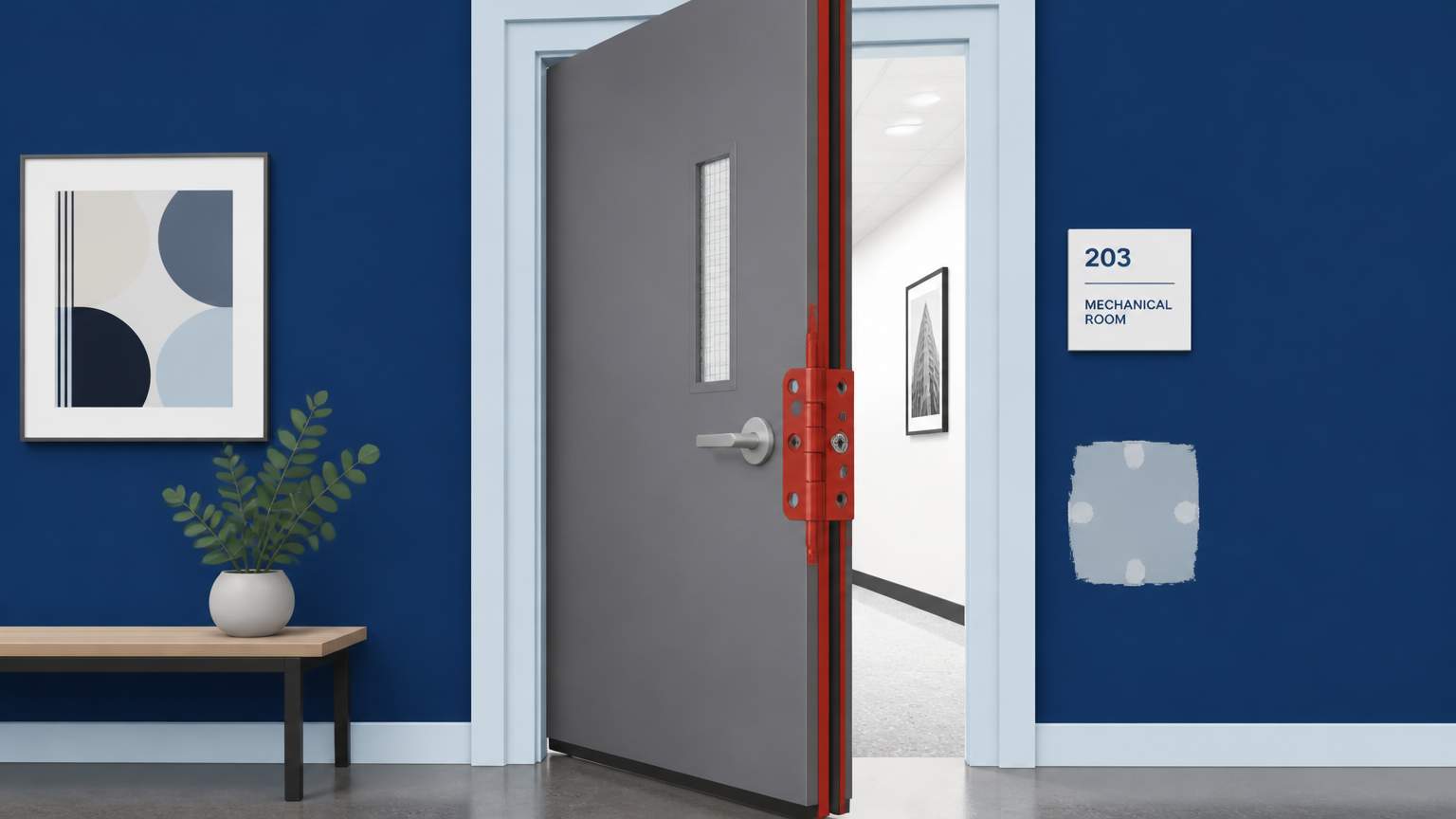
Replacing the windows can lead to a sticking interior door for Florida homeowners who upgrade to a fire‑resistant window and continuous exterior insulation (CEI). The added insulation has raised the temperature of the wall cavity, which can cause the jamb of the door to expand or shift. The flashing and trim that are installed around the new window can encroach on the jamb, leaving the door too little room to open and close freely.
Homeowners often are faced with some version of this complaint: “After replacing my windows, my doors started sticking.” This issue usually results from changes to how hot the walls get, how the flashing and trim fit, and a lack of adequate weatherstripping. Since this only affects interior doors, it is something that can be fixed without calling a licensed contractor.
First, check if you have the correct clearance by measuring the jamb on either side of the door. If the door is too tight on the latch side (it should have 1/8 inch minimum) or on the hinge side (it should have 1/4 inch) loose the hinge screws, raise the door slightly and tighten the screws.
You could also shave down the door’s edge, just on the side that sticks. Use a sanding block or a file for the job.
Second, check the trim and flashing around the window. If they are pushed against the jamb, trim down or replace the trim for the door. This should allow the jamb to shift back to its original position.
Finally, consider adding weather stripping to narrow gaps.
In instances where the doorframe itself is warped or crooked, the door may need to be replaced. That job would involve casing out the new door with measurements so it fits the opening.
In cases that require structural changes, you should consider seeking a licensed professional.
.svg)
.svg)

.svg)
